Sheridan style carving explained
What makes a carving Sheridan style, how it differs from other western floral work, and how to approach your first Sheridan pattern.
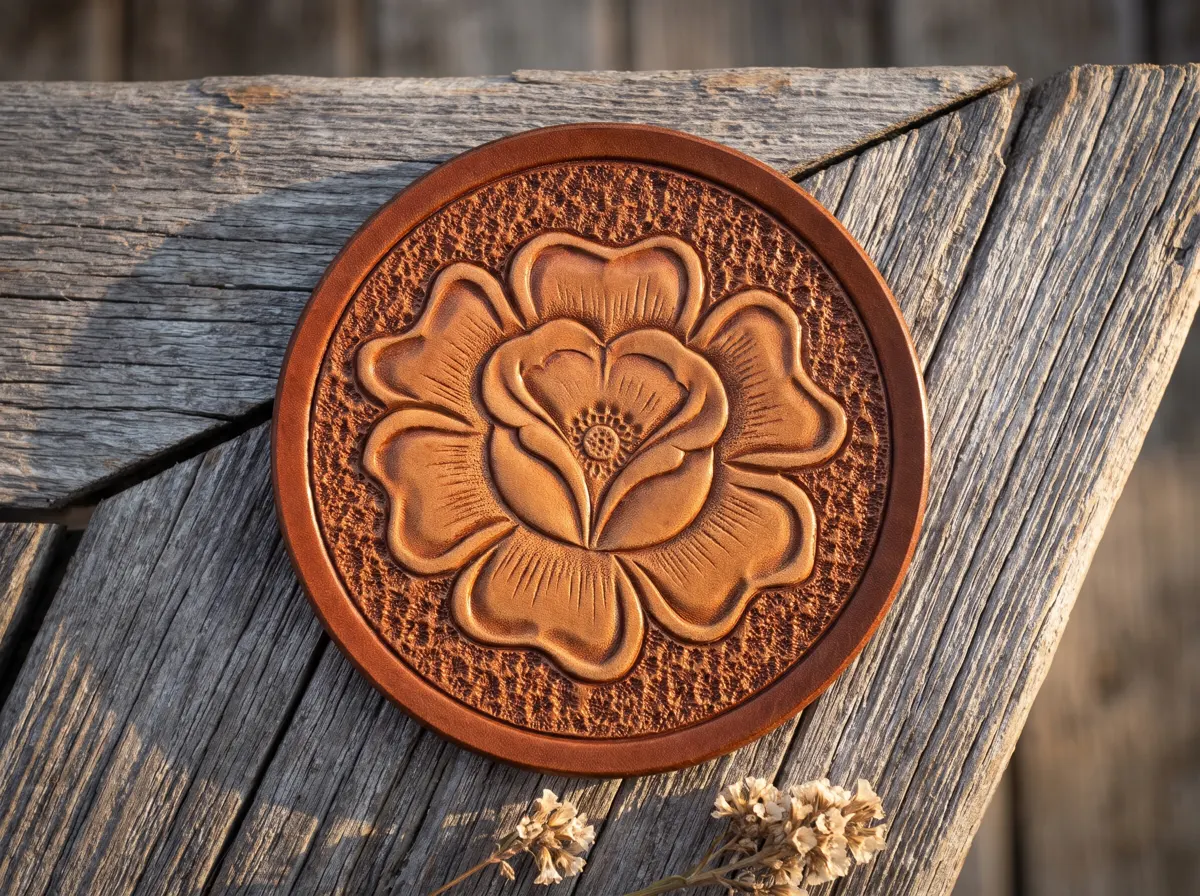
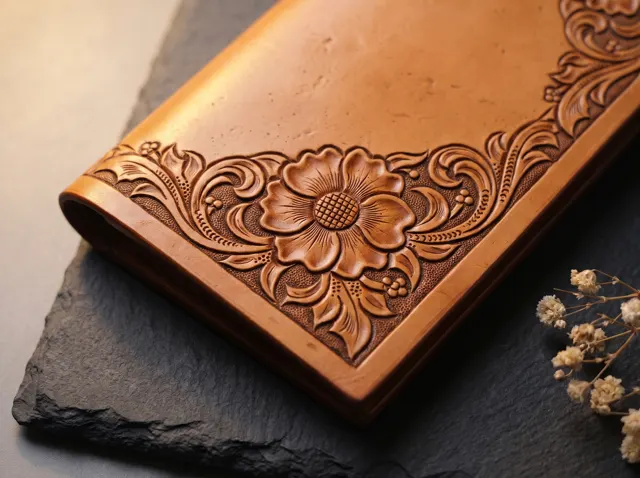
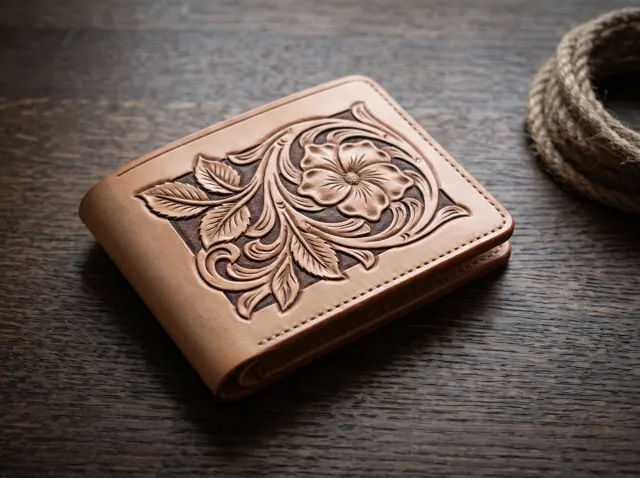
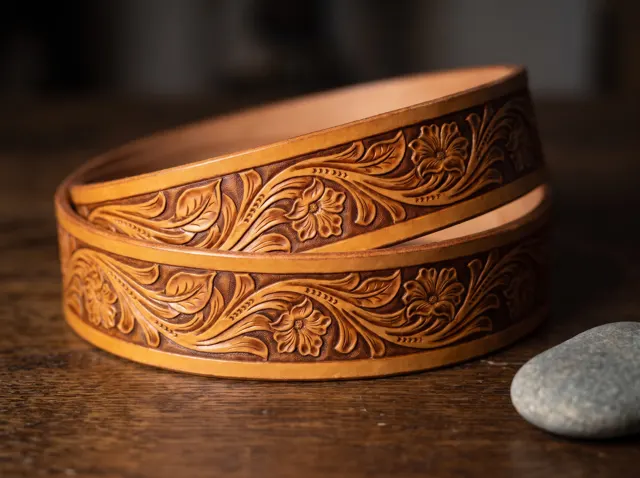
Sheridan style is a kind of western floral carving named after Sheridan, Wyoming, where saddle makers developed it in the mid twentieth century. Don King, a Sheridan saddle maker, is the name most closely linked with it. It is the look most people picture when they think of a tooled western belt or saddle: tight flowers and leaves on flowing scrolls, with very little background showing between them.
How to recognise it
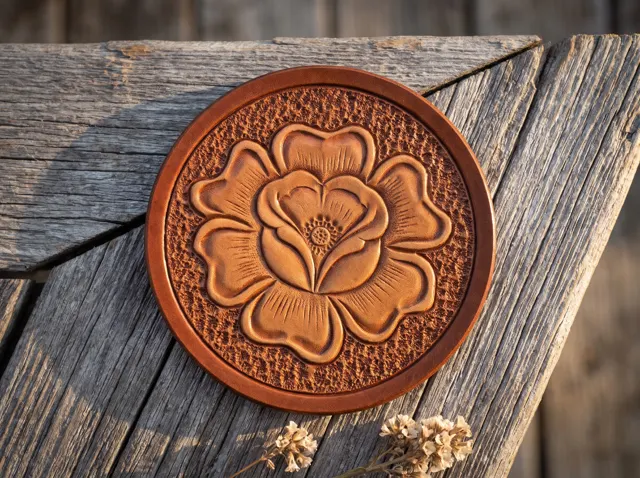
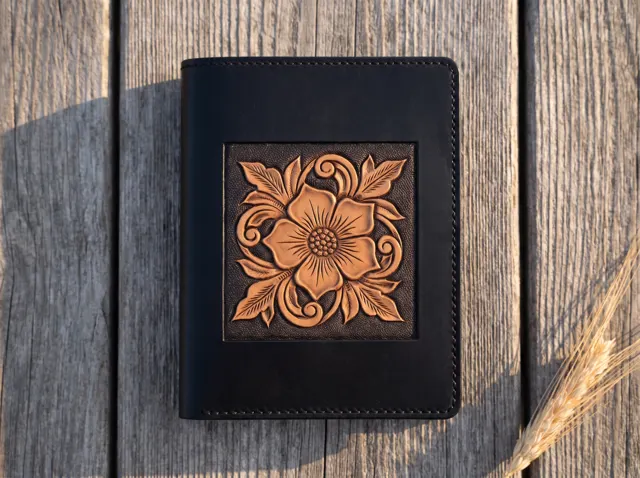
- Flowers, most often wild roses, with round centres built from seeder impressions or small circles.
- Stems that curl into spirals, often ending in a small round scroll.
- Dense coverage. The flowers, leaves and scrolls fill most of the surface, so the background shows only as small dark spaces between them.
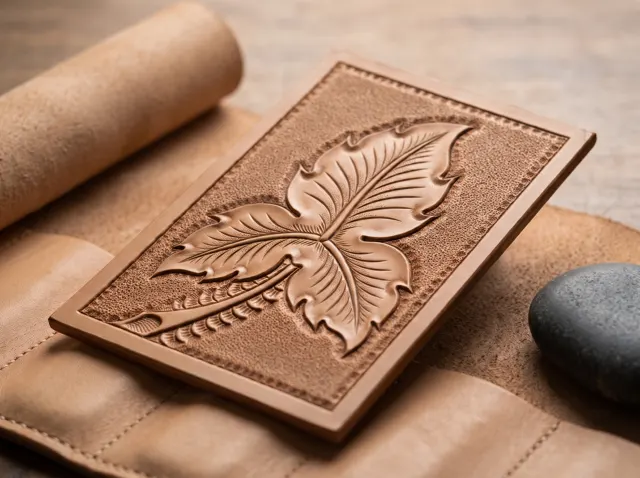
- Many decorative cuts inside petals and leaves, which give the carving its flowing movement.
- Deep, clean bevels that make each element stand clearly above the next.
How it differs from other floral carving
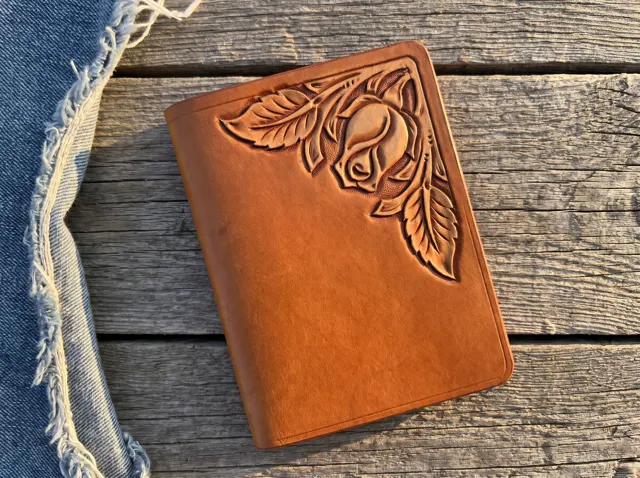
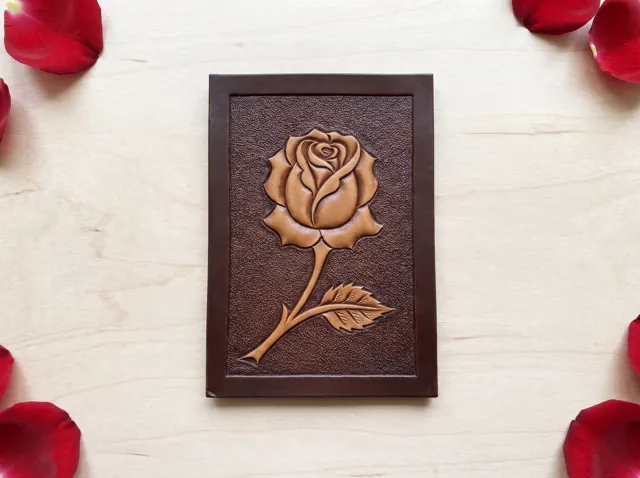
Older western floral work often uses larger, looser flowers with more open background. Sheridan carving packs the design tighter and relies on decorative cuts and shading for detail, so a small piece can look busy in a good way. Because so little background shows, backgrounding takes less time, but the cutting and beveling have to be precise; a crooked line has nowhere to hide.
Tools it uses
Mostly the basic set: swivel knife, bevelers in a few widths, pear shaders, a small backgrounder for tight spaces, veiners, camouflage, seeders and mule foot stamps. The style is defined by how those tools are used: lots of overlapping elements, fine decorative cuts and consistent bevels.
Starting your first Sheridan pattern
Start with a single flower and a short scroll rather than a full belt. Sheridan work depends on clean cutting, so pick a pattern with smooth curves and few overlaps, cut it on scrap first, and get comfortable with the spiral at the end of a scroll; it shows up in almost every Sheridan design. When you move to belts, the same flowers repeat along a running vine, and you can follow our belt layout guide to keep the repeat even.