How to case leather for tooling
How wet veg-tan should be before you cut and stamp it, how to tell when it is ready, and what goes wrong when it is too wet or too dry.
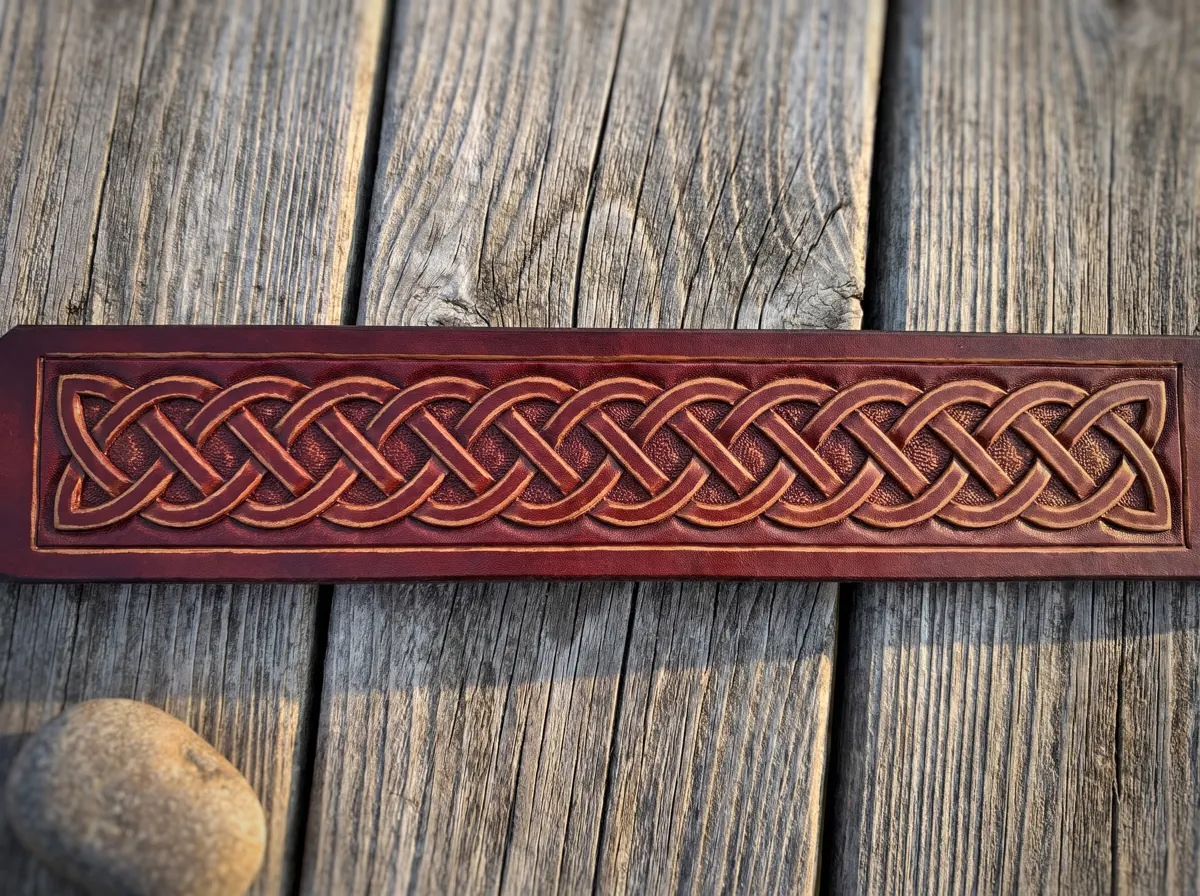
Casing means putting water into vegetable-tanned leather so it takes a cut cleanly and holds a stamp impression. Every tooling pattern starts here, and most beginner problems trace back to it: mushy stamp marks, lines that close up overnight, cuts that drag and tear. Chrome-tanned leather will not hold an impression however you wet it, so make sure you are working on veg-tan.
What you need
A sponge or spray bottle, clean water (distilled if your tap water is hard or iron-rich, because iron reacts with the tannins and leaves grey stains), a smooth non-porous surface to work on, and a plastic bag or wrap if you plan to tool over more than one session.
How to case a piece
- Wipe the grain side (the smooth side) evenly with a damp sponge. Work in overlapping passes so you do not leave dry islands or puddles. The leather darkens as it takes up water.
- Wet the flesh side lightly too on thicker leather, so the moisture meets in the middle instead of sitting only on the surface.
- Wait. The surface needs to come back close to its original colour while the inside stays damp. Depending on the leather and the room, that takes anything from ten minutes to half an hour.
- Check it before you start. Cased leather feels cool against your cheek or the back of your hand, but the surface no longer looks wet.
How to tell if it is too wet or too dry
Too wet, and stamp impressions look soft and spread, the leather goes darker where you strike it, and the swivel knife drags through the leather instead of slicing it. Leave it a little longer.
Too dry, and the leather turns pale and stiff, the knife skips or tears the grain, and bevelers leave a pale, unburnished mark instead of a smooth dark one. Wipe it with the sponge again and give it a few minutes.
The colour change is the most useful signal. Properly cased leather burnishes slightly darker where a beveler polishes it, which is what gives finished tooling its contrast.
Keeping it cased while you work
A large piece, a belt for example, will dry at the edges while you are still working in the middle. Re-wet only the area you are about to tool, and give it a minute to settle before you strike it. When you stop for the day, wrap the piece in plastic and keep it somewhere cool so it stays evenly damp. Some carvers case leather the night before and keep it wrapped overnight for that reason; the moisture spreads evenly through the thickness. Do not leave it wrapped for days, because damp leather can grow mould.
Next step
Once the leather is cased, you can transfer your pattern onto it.